Handwritten Text Recognition (HTR)
Handwritten text recognition turns images of manuscript pages into searchable, editable text. This hub covers how HTR works, where it succeeds and struggles, and how you can make best use of it in your workflows.
9 articles
Leo Team · August 18, 2026
Can AI Read Cursive? Why Modern Handwriting and Historical Hands Are Two Different Problems
Why AI cursive recognition is three different problems — modern joined-up writing, nineteenth-century formal hands, and early-modern scripts — and why models trained on one domain fail on another.
Read the article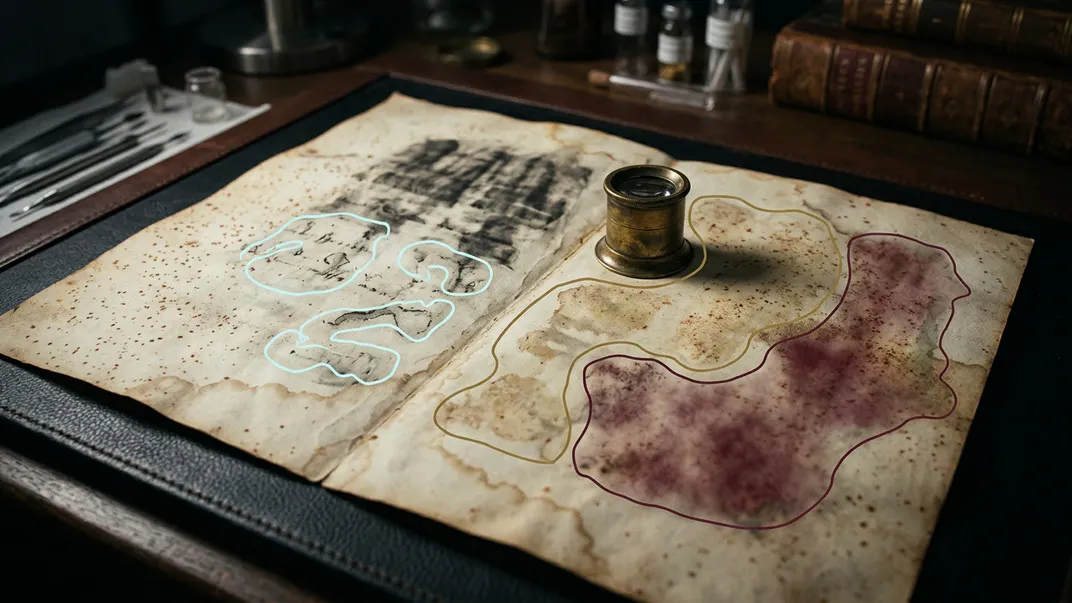
Leo Team · August 6, 2026
Can AI Read Faded Documents? Faded Ink, Foxing, and Show-Through, Triaged
Triage guide for archivists on AI reading of faded documents, sorting capture, recognition, and conservation problems for iron-gall ink, foxing, and show-through.

Leo Team · August 4, 2026
How to Test AI Transcription on Your Own Documents: An Afternoon Protocol
How researchers can test AI transcription tools on their own documents in an afternoon via random sampling, reference keying, CER scoring, and manual error reading for a directional local benchmark.

Leo Team · July 29, 2026
Can AI Read Old Handwriting? What Current Models Manage, and Where They Fail
Assesses how well current AI (OCR, HTR, and general vision-language models) reads historical handwriting, detailing six specific failure modes—especially fluent silent rewriting—and how to evaluate accuracy claims before trusting a tool.

Leo Team · July 22, 2026
Handwritten Text Recognition: A Practical Guide to Reading Historical Documents with AI
Explains what handwritten text recognition (HTR) is, how it differs from OCR, how to interpret accuracy/CER figures, trained vs. zero-shot models, LLM transcription risks, and how to fold machine transcription into a verified historical-research workflow.

Leo Team · July 20, 2026
HTR for Historians: A Practical Guide to Handwritten Text Recognition
Handwritten text recognition for historians, explaining how it differs from OCR and multimodal LLMs, how to judge accuracy, and how to preserve source integrity in transcription workflows.

Leo Team · July 14, 2026
Which Languages and Scripts Can HTR Read? A Guide to HTR Supported Languages
Which languages and scripts HTR can read, and why real support depends on script, language, and hand rather than language-count marketing.

Leo Team · July 14, 2026
HTR vs OCR: What the Difference Is, and When It Matters for Historical Documents
Explains the practical difference between OCR and HTR for historical documents, showing how each handles print and handwriting, where both fail, and why ATR matters.

Leo Team · July 14, 2026
How Handwritten Text Recognition Works: A Look Inside the HTR Pipeline
How handwritten text recognition pipelines work from image capture to export, including segmentation, CTC-based architectures, and why accuracy depends on manuscript match.
Read the article
Decipher your archive


© 2026 Leo Technologies Limited. All rights reserved