Genealogy Record Transcription: How to Turn Family Records into Text You Can Trust
Genealogy record transcription explained as a discipline of verbatim, faithful copying of family records, covering transcription vs. extract/abstract, editorial conventions, record-type pitfalls (dates, parish registers, wills, censuses), and where crowdsourced indexing, OCR, LLMs, and specialist tools each fall short.
Leo Team
July 22, 2026
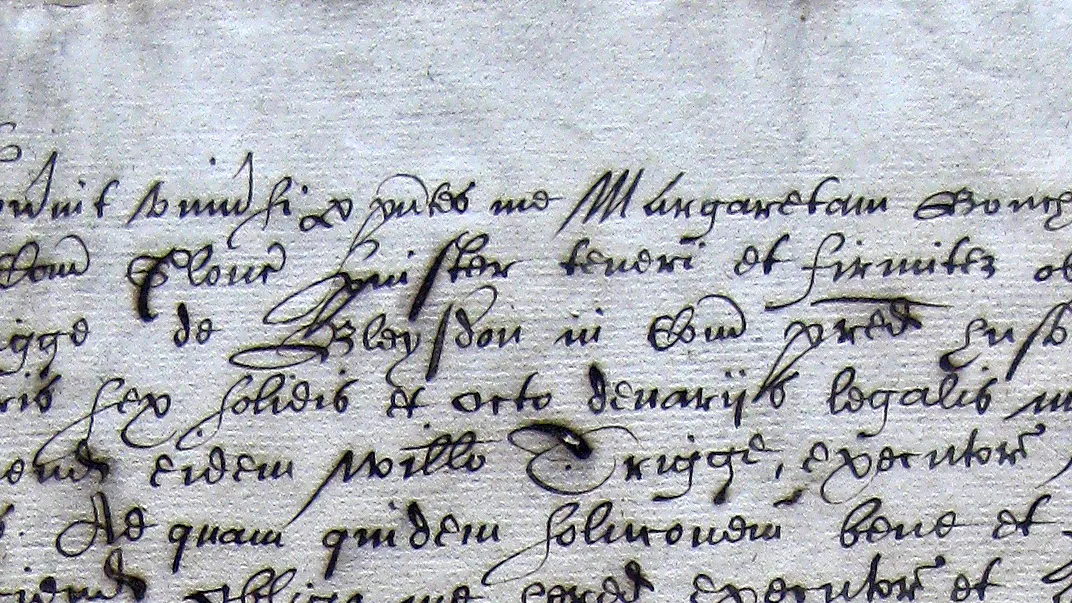
This is a working guide to genealogy record transcription — the discipline of producing a faithful, word-for-word copy of a parish register, will, census return, or letter that another researcher can verify against the page. Get it right and you build a lineage on evidence. Get it wrong, or hand it to a tool that "corrects" as it reads, and quiet errors travel through every conclusion that follows.
Genealogy record transcription is the practice of producing a precise, word-for-word copy of a family record — a parish register, a will, a census return, a letter — preserving its original spelling, abbreviations, and layout rather than tidying them into modern prose. A transcription is not an index entry and not a summary: it reproduces what is on the page so that the reading can be verified independently. Done well, it becomes evidence you can build a lineage on. Done carelessly — or handed to a tool that "corrects" as it reads — it quietly introduces errors that propagate through every conclusion downstream.
That last risk is the one most family historians underestimate, and it is where most of this guide spends its time. The hard part of transcription is rarely the typing. It is deciding what faithfulness means, resisting the urge to improve the source, and knowing when a reading is genuinely uncertain. This piece is one part of a broader guide to transcribing genealogy and family history records; here the focus is the discipline of producing text you can actually trust.
Transcription, extract, abstract: three different things
Before touching a record, it helps to know which of three outputs you are producing, because genealogists routinely conflate them and the standards bodies do not.
A transcription is a full, verbatim copy of the source, spelling and abbreviations intact. An abstract is a brief narrative summary of the key facts, written in plain prose. An extract is a structured capture of specific pre-determined fields — names, dates, places — entered into a template. The National Genealogical Society's guidance on transcribing, extracting, and abstracting draws these lines precisely, and the distinction matters because each serves a different purpose. An extract feeds a database. An abstract summarizes for a report. Only a transcription preserves enough of the original to let another researcher check your work against the page.
This is where the single most damaging misconception in family history takes hold: the belief that the index is the record. The name you found in a FamilySearch or Ancestry search result is an extract, produced by someone else, capturing a few fields and nothing more. It is a derivative source — a starting point, not evidence. The Genealogical Proof Standard maintained by the Board for Certification of Genealogists requires you to distinguish original from derivative sources and to consult the original record itself. A transcription is how you engage with that original in a form you can cite, share, and defend.
Decide your level of faithfulness — and hold to it
There is no single "correct" transcription. There is a spectrum of editorial approaches, and the honest move is to pick one deliberately and apply it consistently.
- Diplomatic transcription reproduces the source verbatim: original spelling, abbreviations, punctuation, capitalisation, and line layout, all preserved. Nothing is expanded, nothing corrected.
- Semi-diplomatic transcription preserves most original features but silently expands obvious abbreviations — so `wth` becomes `with` — while leaving spelling and word forms untouched.
- Normalized transcription converts spelling, abbreviations, punctuation, and capitalisation to modern form.
For genealogical evidence, lean toward the diplomatic end. The reason is not pedantry. Original spelling carries information. The variants Ellin / Ellen / Eleanor may distinguish one individual from another, mark a scribe's regional habits, or preserve a phonetic clue to how a name was actually said. Silently modernizing them destroys evidence that a later researcher — possibly you, three years on — would need to resolve a conflict. The standards bodies describe principles here but stop short of prescribing exact normalization thresholds; that choice is left to house style. What they are unanimous on is that "tidying up spelling" is never harmless housekeeping. It is the quiet deletion of the source's own record.
If you must intervene, do it visibly. The established editorial conventions exist precisely so that your hand is distinguishable from the scribe's:
- Square brackets `[ ]` enclose editorial insertions and expanded abbreviations — `yo[u]r`, `Rich[ar]d`.
- `[sic]` flags an apparent error that is genuinely in the source, so a reader knows you copied it faithfully rather than mistyped.
- Ellipsis `…` marks material you have omitted.
- Angle brackets `< >` (in some conventions) mark text lost to damage or illegibility.
The rule beneath all of these: the reader must always be able to tell what the document says from what you have added. Blur that line and the transcription stops being evidence.
Know the traps specific to your record type
Faithful copying still requires you to understand the record in front of you. A handful of chronological quirks in English records catch genealogists repeatedly, and no transcription tool will warn you about them.
Dates before 1752
In September 1752 Britain and its American colonies adopted the Gregorian calendar, skipping eleven days — 3 to 13 September 1752 vanished. Worse for the transcriber, the legal year before then began on 25 March (Lady Day), not 1 January. A baptism the scribe dated "12 February 1719" may, by modern reckoning, fall in 1720. Transcribe the date exactly as written, then record the Old Style / New Style implication in your notes — never silently "fix" the year on the page.
Parish registers
English registers begin with Thomas Cromwell's 1538 injunction. Bishop's Transcripts — annual parish copies sent to the diocesan bishop — survive from around 1598 and are themselves derivatives, sometimes diverging from the original register. Lord Hardwicke's Marriage Act of 1753 (effective 1754) standardized marriage entries, and Rose's Act of 1812 introduced pre-printed register books with fixed columns. The format you are reading tells you roughly when it was written; the faithful transcription of parish registers is a distinct enough problem to warrant its own method.
Wills
Before 1858, English wills were proved in church courts, the Prerogative Court of Canterbury handling the largest estates; civil probate begins in 1858. Wills carry their own structural formulae and a heavy load of secretary-hand abbreviation, which is why transcribing old wills rewards a dedicated approach.
Census returns
England and Wales took a census every ten years from 1801, but only 1841 onward survives in full. The 1841 return rounded ages over 15 down to the nearest five — so a recorded "30" means somewhere between 30 and 34. This is a case where reading census records column by column against the original image protects you from a whole class of quiet errors.
The skill underneath: paleography
The deeper skill under all of these is paleography. Old handwriting is not uniform: secretary hand, court hand, italic, and later copperplate each demand their own eye, and a single scribe's hand drifts over a career. If you are hitting a wall on the letterforms themselves, a structured method for reading old handwriting — identifying the hand, learning its deceptive letterforms, expanding its abbreviations — will do more for your accuracy than any tool. Two forms worth studying directly are secretary hand, the workhorse of early modern English records, and the manuscript abbreviations and ligatures that scribes used to save space and that machines routinely mangle.
Where machine transcription helps — and where it misleads
Once you are transcribing dozens of pages rather than one, the manual bottleneck becomes real, and the question turns to tooling. Here it pays to be precise about what the available tools actually do, because the failure modes differ.
Crowdsourced indexing — FamilySearch, Ancestry, FreeBMD — achieves enormous scale; FamilySearch reports around 400,000 records indexed per day, each read twice by independent volunteers and arbitrated when they disagree. But indexing captures only a few fields and is vulnerable to misread scripts and silently expanded abbreviations. It is a search aid, not a transcription.
General-purpose OCR — Google Cloud Vision, ABBYY, Amazon Textract — is fast and strong on clean modern print, but it degrades sharply on manuscript hands and on historical typography.
The tool most family historians now reach for first is a general chatbot, and it is the one that most deserves caution. General-purpose LLMs produce fluent, confident, plausible-looking transcriptions — and that fluency is exactly the danger. They hallucinate readings, normalize archaic spellings, and expand abbreviations without telling you. A 2025 benchmark by Crosilla, Klic, and Colavizza found that even the best proprietary models approach specialist recognition on modern English handwriting but degrade significantly on historical scripts and non-English languages, and lack reliable self-correction — a finding worth weighing against its scope: a single benchmark whose output, like any machine output, still requires verification against the image. The distinction that matters for genealogy is the shape of the error. Garbled OCR looks wrong and you catch it. A fluent fabrication reads perfectly and slips into your family tree unnoticed. This is why ChatGPT struggles with historical handwriting, and why the safest error is the recoverable one.
Specialist handwritten text recognition sits between these. Tools like Transkribus can reach character error rates in the 2–8% range on handwritten material — but typically only after you supply ground-truth training data and retrain for each new hand, which is a genuine investment of pages and time.
This is the stage where Leo is built to fit. Its transcription model, ATR-1, reads Latin-script manuscripts — English parish registers, French notarial records, Dutch registers, German parish books, and other languages written in that alphabet — out of the box, with no per-hand model to train first. Its design principle is the one argued for throughout this guide: transcribe what is on the page. It preserves strikethroughs, marginal additions, and archaic spelling rather than smoothing them into modern prose, and where it expands an abbreviation it does so as a visible editorial act, not a silent one. On a randomized 97-image sample of early-modern English manuscripts from the Folger Shakespeare Library, ATR-1 scored roughly a 5% character error rate at release — about 61% fewer errors than the next-best model tested, with the full comparison published here. Corrections you make in the app feed back into training, so accuracy compounds over successive releases. What it does not do is remove the historian from the loop: the base transcription is a first-pass reading to verify, not a verdict to trust.
Verify against the image — always
No transcription, machine or manual, is finished until it has been checked against the original. This is not a formality. It is the step that converts a draft into evidence.
Read your transcription with the image beside it, not from memory. Prioritize the high-stakes tokens: names, dates, numbers, place names, relationships. A misread digit in an age or a swapped letter in a surname does more damage than a dropped comma. Interpret error rates concretely — a 5% character error rate across a dense parish folio still means dozens of characters to catch, and they cluster where they hurt most, in the very names you are researching. A working method for verifying transcription accuracy will save you from trusting a clean-looking reading that happens to be wrong in exactly one place.
Keep interpretation separate from the base text. When you want to modernize spelling, translate a Latin will, or summarize a long deed, do it as a distinct layer — a separate annotation or version — so the faithful transcription underneath stays intact and citable. The moment analysis gets baked into the base reading, you have lost the ability to verify it, and with it the evidentiary value the transcription existed to preserve.
That discipline — copy faithfully, mark your interventions, check against the image, keep interpretation apart — is what separates a family tree you can defend from one built on plausible guesses. The tools will keep improving. The judgment about what the page actually says, and the honesty to record it exactly, remain yours.
Frequently Asked Questions
What is genealogy record transcription?
Genealogy record transcription is the practice of producing a precise, word-for-word copy of a family record — a parish register, a will, a census return, a letter — preserving its original spelling, abbreviations, and layout rather than tidying them into modern prose. It is not an index entry and not a summary: it reproduces exactly what is on the page so another researcher can verify the reading independently. Done well, it becomes evidence you can build a lineage on. Done carelessly, or handed to a tool that "corrects" as it reads, it quietly introduces errors that travel through every conclusion downstream.
What is the difference between a transcription, an extract, and an abstract?
A transcription is a full, verbatim copy of the source with spelling and abbreviations intact. An abstract is a brief narrative summary of the key facts, written in plain prose. An extract is a structured capture of specific pre-determined fields — names, dates, places — entered into a template. Each serves a different purpose: an extract feeds a database, an abstract summarizes for a report, and only a transcription preserves enough of the original to let another researcher check your work against the page. The name you find in a search result is an extract — a derivative source, a starting point, not evidence.
Should I keep original spelling when transcribing an old document?
Yes — for genealogical evidence, preserve original spelling rather than modernizing it. Original spelling carries information. Variants like Ellin, Ellen, or Eleanor may distinguish one individual from another, mark a scribe's regional habits, or preserve a phonetic clue to how a name was actually said. Silently modernizing them destroys evidence a later researcher would need to resolve a conflict. This is diplomatic transcription: reproducing the source verbatim, with original spelling, abbreviations, punctuation, and layout preserved. If you must intervene, do it visibly — square brackets for expanded abbreviations, [sic] for genuine source errors — so your hand stays distinguishable from the scribe's.
Can ChatGPT transcribe old handwriting accurately?
No — general-purpose chatbots are the tools that most deserve caution for historical handwriting. They produce fluent, confident, plausible-looking transcriptions, and that fluency is the danger: they hallucinate readings, normalize archaic spellings, and expand abbreviations without telling you. A 2025 benchmark found that even the best proprietary models approach specialist recognition on modern English handwriting but degrade significantly on historical scripts and non-English languages, and lack reliable self-correction. The problem is the shape of the error: garbled output looks wrong and you catch it, but a fluent fabrication reads perfectly and slips into your family tree unnoticed.
Why do dates before 1752 cause problems in genealogy transcription?
Dates before 1752 are tricky because the legal year in Britain and its American colonies began on 25 March (Lady Day), not 1 January, and in September 1752 the country adopted the Gregorian calendar, skipping eleven days. A baptism the scribe dated "12 February 1719" may, by modern reckoning, fall in 1720. The rule is to transcribe the date exactly as written on the page, then record the Old Style / New Style implication in your notes — never silently "fix" the year on the document itself, because that alters the source and destroys the evidence a later reader needs.