The Bee's Discretion: How a Swedish Jurist Split the Sea in Two and Slipped Between Grotius and Selden
The usual account of who decided the sea was free in the 1600s runs from Grotius to Selden to Bijnkershoek, a duel between Dutch and English giants over whether the ocean could be owned. A Swedish professor named Johannes Loccenius refused both extremes and built a third position that quietly anticipated the modern law of coastal waters, which suggests the jurists of the Baltic periphery were doing more than copying out doctrine handed down from the great capitals.
ExLatinis
July 17, 2026
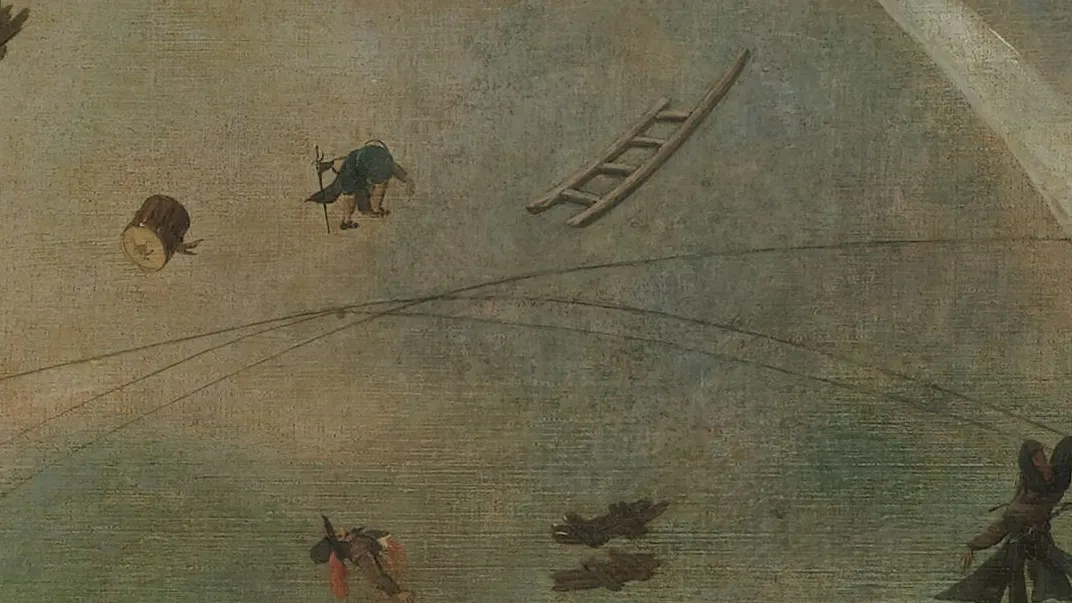
On Johannes Loccenius's De iure maritimo et navali libri tres, first printed at Stockholm in 1651.
The usual account of who decided the sea was free in the 1600s runs from Grotius to Selden to Bijnkershoek, a duel between Dutch and English giants over whether the ocean could be owned. A Swedish professor named Johannes Loccenius refused both extremes and built a third position that quietly anticipated the modern law of coastal waters, which suggests the jurists of the Baltic periphery were doing more than copying out doctrine handed down from the great capitals.
A question set between two dominions
In 1651 the Amsterdam-linked press of Jan Janssonius issued from its Stockholm branch a quarto volume whose engraved title page showed a ship carrying the book's own title in its sail, with Justice standing aboard holding her scales. The book was De iure maritimo et navali libri tres, Three Books on the Law Maritime and Naval, and its author was Johannes Loccenius, a German-born jurist who held the chair at Uppsala and served the Swedish crown as royal historiographer. Buried in the fourth chapter of the first book, Loccenius set the great argument of his generation as a matter drawn inter imperium maris universale, & particulare, between universal and particular dominion of the sea.
That small grammatical division carried the whole weight of his intervention. The standard genealogy of the law of the sea moves in a straight line from Hugo Grotius, who argued in Mare liberum (1609) that the ocean could belong to no one, to John Selden, who answered in Mare clausum (1635) that England most certainly could close its waters, and onward to Cornelius van Bijnkershoek's De dominio maris (1703). The freedom of the sea stood against the closure of the sea, a binary settled by the two nations with the ships to enforce it. Loccenius worked at the northern edge of the ius commune, the shared body of Roman and canon law that ran across the whole integrated commercial world of the Baltic and North Sea, where Baltic jurists were assumed to receive doctrine rather than make it. He cut the question in half. He resisted imperium maris universale, the claim to a universal dominion analogous to the civitas maxima of the late-scholastic writers such as Suárez. He conceded imperium maris particulare, the legitimate coastal jurisdiction over bays, straits, and the zones a state needs for navigation.

This westward view of Stockholm, titled in Latin as the royal seat of Sweden, presents the Baltic capital as a maritime city of clustered islands, labeled waters, and a harbor dense with ships. More a setting than a document of his argument, it situates Loccenius's distinction between universal and particular sea-dominion in the Swedish commercial world of bays, straits, and navigation for which such doctrines mattered. Source ↗.
The bee among the flowers
Loccenius announced his working method at the outset, borrowing an image every humanist reader would have recognized. It pleased him to imitate the bees, which so sip flowers of every kind that they draw the best nectar from them, Imitari / hîc apes placuit. The apis ex omnibus floribus (the bee gathering from all flowers) was a commonplace, but Loccenius meant something exacting by it. He faced Roman civil law, Scripture, the Laws of Wisby, the Hanseatic ordinances, and the Belgic customs, none of which spoke with one voice or claimed equal rank. The bee does not defer to the flower of highest pedigree. It takes from each what is best and retains sovereign discretion over what to keep. The genius of the thing lies not in owning the sources but in the judgment about which fragments belong together.
That discretion is what let him split the sea. He declined to submit to Grotius or to Selden and instead arraigned them against one another as parties to a suit, citing Seldeno in Mari clauso, Selden in Mare clausum, along with Rivius in his naval history and Pontanus in his Historical Discussions. Then he did something more theatrical still. He recruited a sovereign as arbiter, inviting his readers to hear Reginam Angliæ Elisabetham arbitram, Queen Elizabeth of England as adjudicator, who had answered the Spanish envoy through her council, as recorded in Camden under the year 1580. The verb he chose was audiant, let them hear, and it stages the exposition as a tribunal where diplomatic precedent testifies alongside the jurists and the reader weighs the ruling.
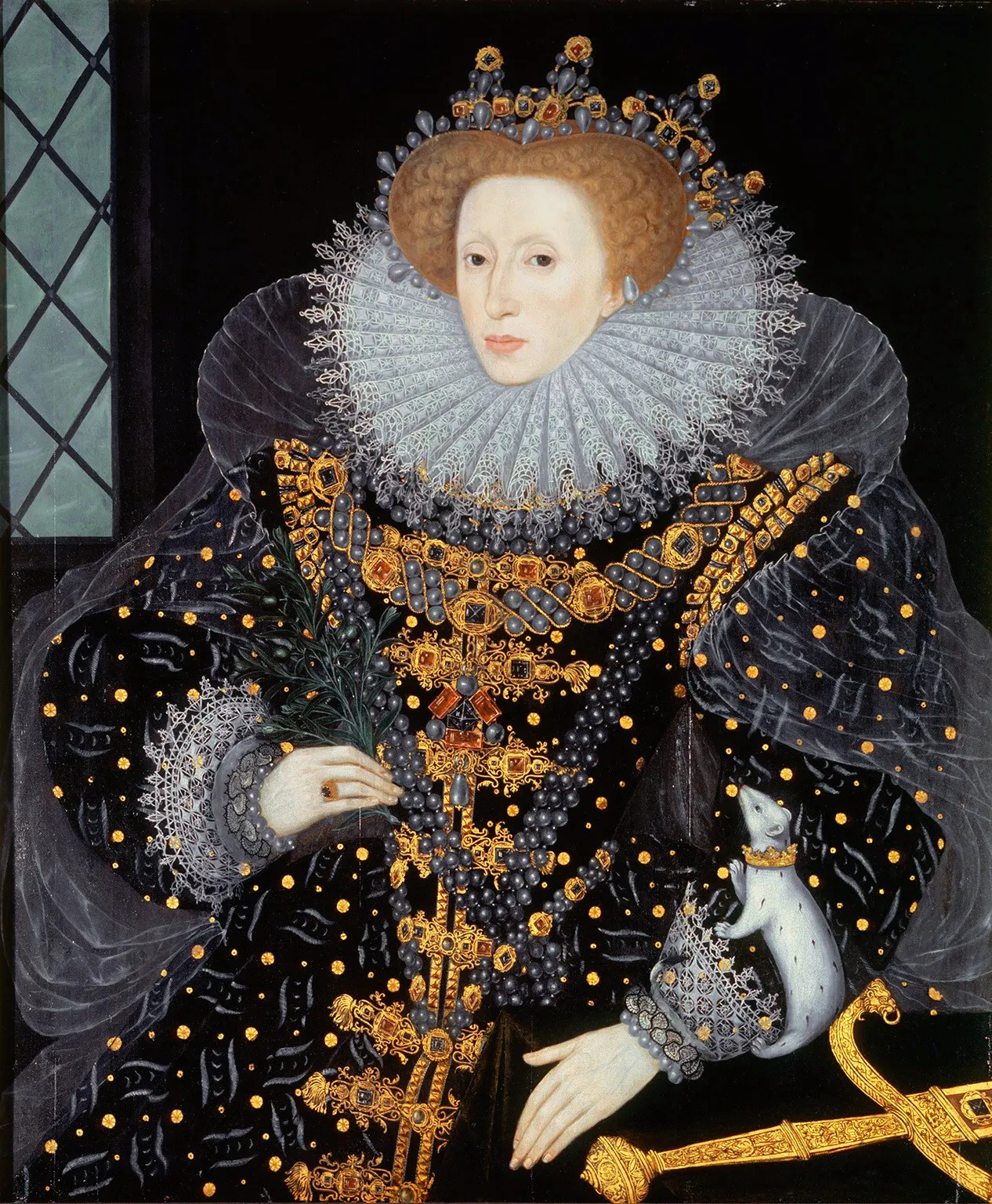
In the Ermine Portrait, Elizabeth I's jeweled black dress and formal stillness project the sovereign authority Loccenius turns into legal theater when he asks readers to "hear" the Queen of England as arbiter. Her image gives a face to the diplomatic precedent—Camden's account of her council's reply to Spain—that enters the sea-dominion dispute like testimony before a tribunal. Source ↗.
The risk is the product
The same discretion governs his handling of money, and here the bee draws moral theology into juridical doctrine. The Church condemned charging interest as usury, yet merchants who financed voyages plainly expected a return. Loccenius licensed the maritime loan by defining it as money that a creditor, having taken the peril of a doubtful outcome upon himself, hands over at fixed interest tanquam periculi compensatione, as compensation for the risk. The whole legitimacy of the instrument sits in the assumption of periculum (peril). Because the lender will lose everything if the ship goes to the bottom, the interest is no longer usury but payment for bearing that danger. The hedging particle tanquam, as it were, marks a jurist who knows he applies the category by analogy rather than identity, the reasoning inherited from Aquinas and filtered through the Jesuit casuists Lessius and Molina. He then confirmed the doctrine with a Swedish judgment on maritime loans adjudicated thirteen years earlier before the royal courts, setting living Nordic case law beside the Roman definition as its confirming instance.
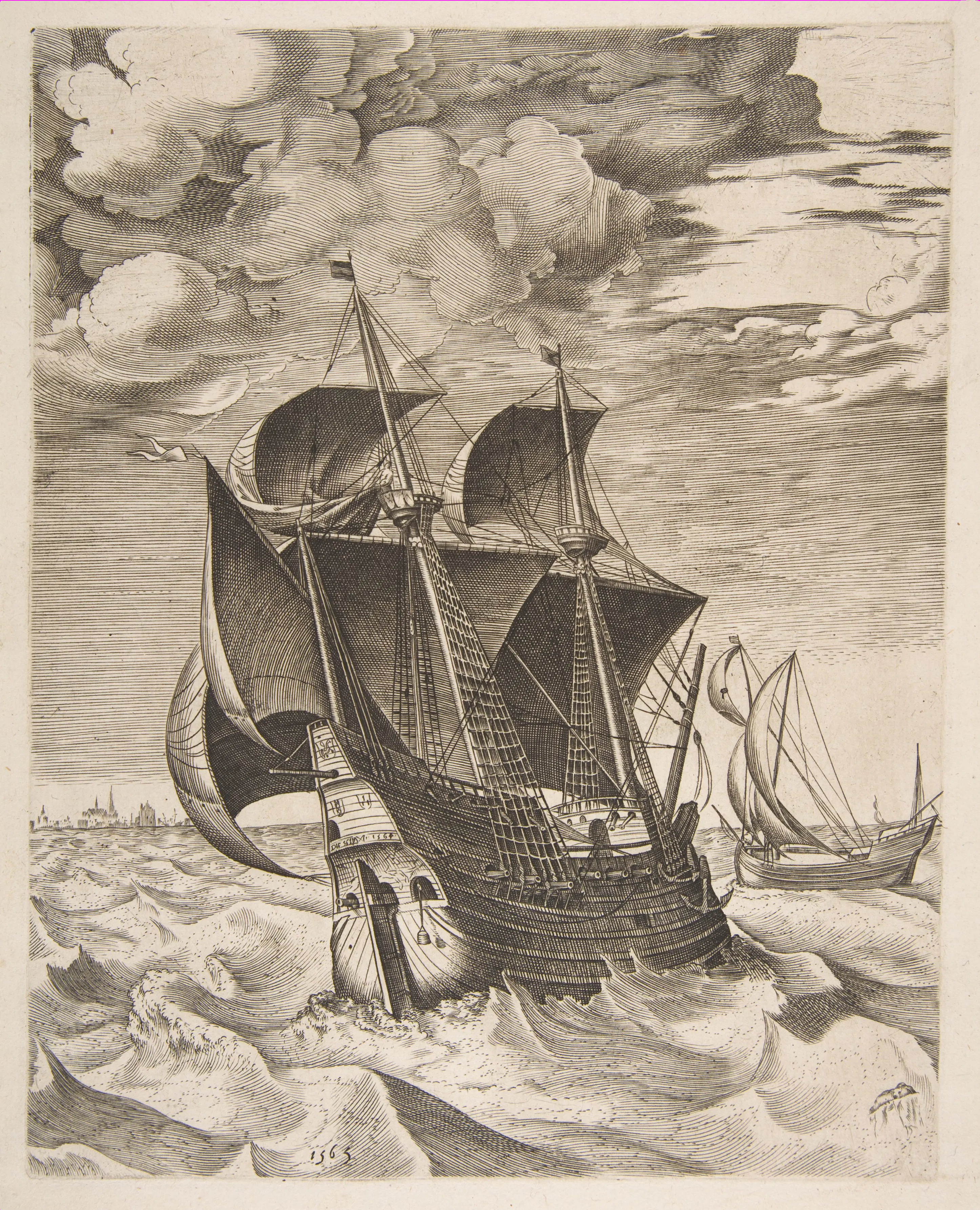
This print of a Dutch hulk and a boeier straining in rough water gives visual weight to the legal category of periculum: the maritime loan rested on the chance that wind, waves, and loss at sea could erase the lender's capital along with the ship. Such working vessels were the material world behind a doctrine that made interest defensible not as usury, but as compensation for bearing danger. Source ↗.
That documentary impulse ran throughout. Elsewhere he simply transcribed a merchant's boilerplate whole, the subscribers who promittimus & obligamus / nos ad avertendum periculum promised and bound themselves to avert the peril, an insurance undertaking lifted from the quay and set among the citations of Roman jurists as though it carried the same weight.
Wisby against Rhodes
The wager beneath all of this appears in the preface, where Loccenius summoned the medieval sea laws that ruled the Baltic ad testimonium, as witnesses, and claimed that they hold eandem ferme authoritatem nearly the same authority the Rhodian laws once held. The temporal contrast does the elevating work. The Rhodian Sea Law, the ancient touchstone of the whole genre, is invoked in the past tense as a bygone standard. The Wisby laws hold their authority hodie, today. The north is positioned as the living successor of a venerable antiquity, and the cautious ferme, nearly, is precisely what keeps the claim persuasive rather than merely loud. The Wisby ordinances carried the authority of the herring trade. The Rhodian law carried the accumulated dignity of a millennium. Setting them level was claiming something the sources themselves would not underwrite, and he knew it.
By 1740 the argument had hardened into a canon. Johann Gottlieb Heineccius bound Loccenius together with Kuricke of Hamburg and Stypmann of Greifswald into a single fasciculus, the foundational trio of the Northern maritime-law tradition, and the treatise was consulted by Lord Mansfield and Sir William Scott in the English admiralty courts. The genealogy that begins with Grotius and Selden has room, on inspection, for a professor who divided the dominion of the sea from a chair in Uppsala and left the modern doctrine of the territorial sea most of its shape. Whether anyone told the standard textbooks is another matter.
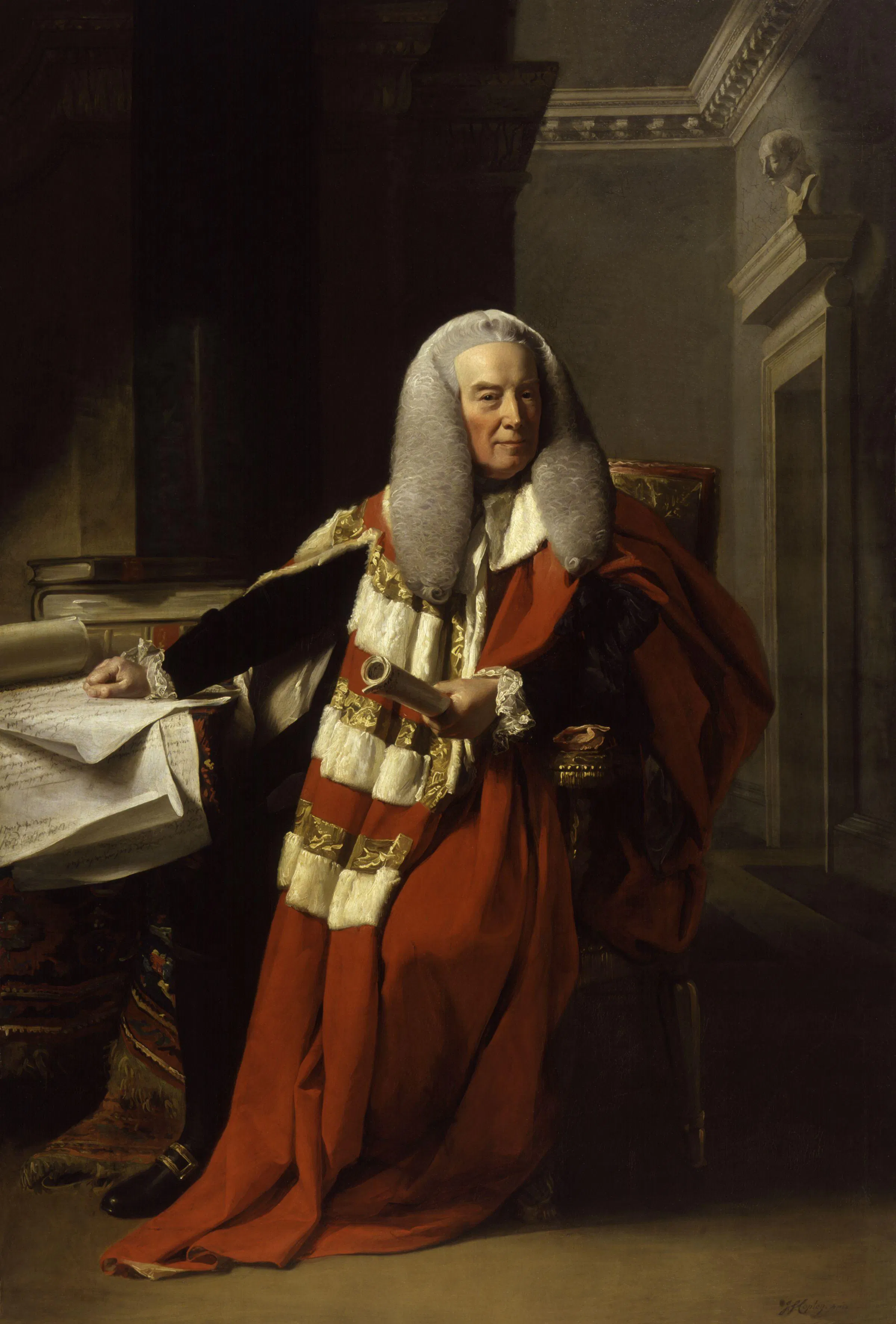
John Singleton Copley's portrait of William Murray, 1st Earl of Mansfield, presents the Lord Chief Justice in the robes and papers of high English judicature—the institutional world in which Loccenius's northern maritime-law learning would later be consulted. Mansfield's presence gives a face to the treatise's unexpected journey from a professor's chair in Uppsala into the legal reasoning of the imperial centre. Source ↗.
More from ExLatinis
This text was transcribed and translated as part of the ExLatinis project—an effort by Leo to make English translations of every published text in Latin in early modern Europe (between 1450 and 1750) available to the public for free online.
→ Read the full transcription and translation on Leo
You can save a copy of this document into your Leo account to run deep text searches, conduct further analysis, or cross-reference it with your own research.
If you want more than an introduction, you can also consult a full, in-depth report drawn from the original transcription alongside relevant secondary sources, with extended analysis and historical context beyond the scope of this post.
→ Read the full in-depth report and finding guide
Critical Further Reading & Contextual Resources
- Ciara Kennefick, “English Law’s Encounters with Sweden’s Loccenius,” Stockholm Centre for Commercial Law: This is the piece to read after the article’s last paragraph, because it follows Loccenius from Uppsala into English reports rather than stopping at bibliographic admiration. Kennefick is especially good on the oddity of Mansfield and Scott citing a Swedish-Latin jurist when the common-law bar liked to pretend its learning was home-grown.
- Martine Julia van Ittersum, “Hugo Grotius in Context: Van Heemskerck’s Capture of the Santa Catarina and Its Justification in De Jure Praedae,” Asian Journal of Social Science: Van Ittersum puts Mare liberum back inside the VOC prize case that produced it, which usefully deflates the schoolbook Grotius as disembodied apostle of open water. Loccenius’s moderation looks less timid once Grotius is seen arguing from a cargo hold, not Mount Sinai.
- John Selden, Of the Dominion, or Ownership of the Sea: Selden supplies the maximal English answer: seas can be possessed, and the proof is a thicket of charters, chronicles, coins, and royal muscle. Reading him beside Loccenius shows how much the Swede accepts from closed-sea reasoning while refusing to let it swallow the Atlantic whole.
- Bernard Matthiass, Das foenus nauticum und die geschichtliche Entwicklung der Bodmerei: For the blog’s claim that risk turns interest into a lawful maritime return, this is the technical back room. Matthiass tracks bottomry and foenus nauticum with the patience of someone willing to follow money through every doctrinal drainpipe, which is exactly where Loccenius hid his cleanest piece of casuistry.
- D. P. O’Connell, The International Law of the Sea, Volume I: O’Connell gives the later legal architecture—territorial sea, adjacent zones, high seas—against which Loccenius’s universal/particular distinction stops looking like a scholastic nicety. It is not bedtime reading, but it shows why a small Latin hinge in 1651 still opens a modern door.
- Travers Twiss, The Black Book of the Admiralty, Volume IV: Twiss prints and compares the medieval sea-law materials—Oléron, Wisby, and admiralty customs—that Loccenius treated as living forensic witnesses. Use it to check the audacity of placing Wisby near Rhodes: the northern ordinances were practical, busy, and far less interested in sounding antique than Loccenius was.
This blog post is intended as a brief, exploratory introduction to the text. It was generated autonomously by an advanced AI assistant as part of the ExLatinis digital humanities initiative and should be treated as a primer to foster curiosity rather than a replacement for peer-reviewed scholarly sources, formal critical editions, or definitive historical commentary.