Reading Early Modern Paleography: A Working Guide to the Hands, Letterforms, and Transcription
Early modern paleography guide to identifying major manuscript hands, decoding misleading letterforms and dating conventions, and using machine transcription without losing source integrity.
Leo Team
July 14, 2026
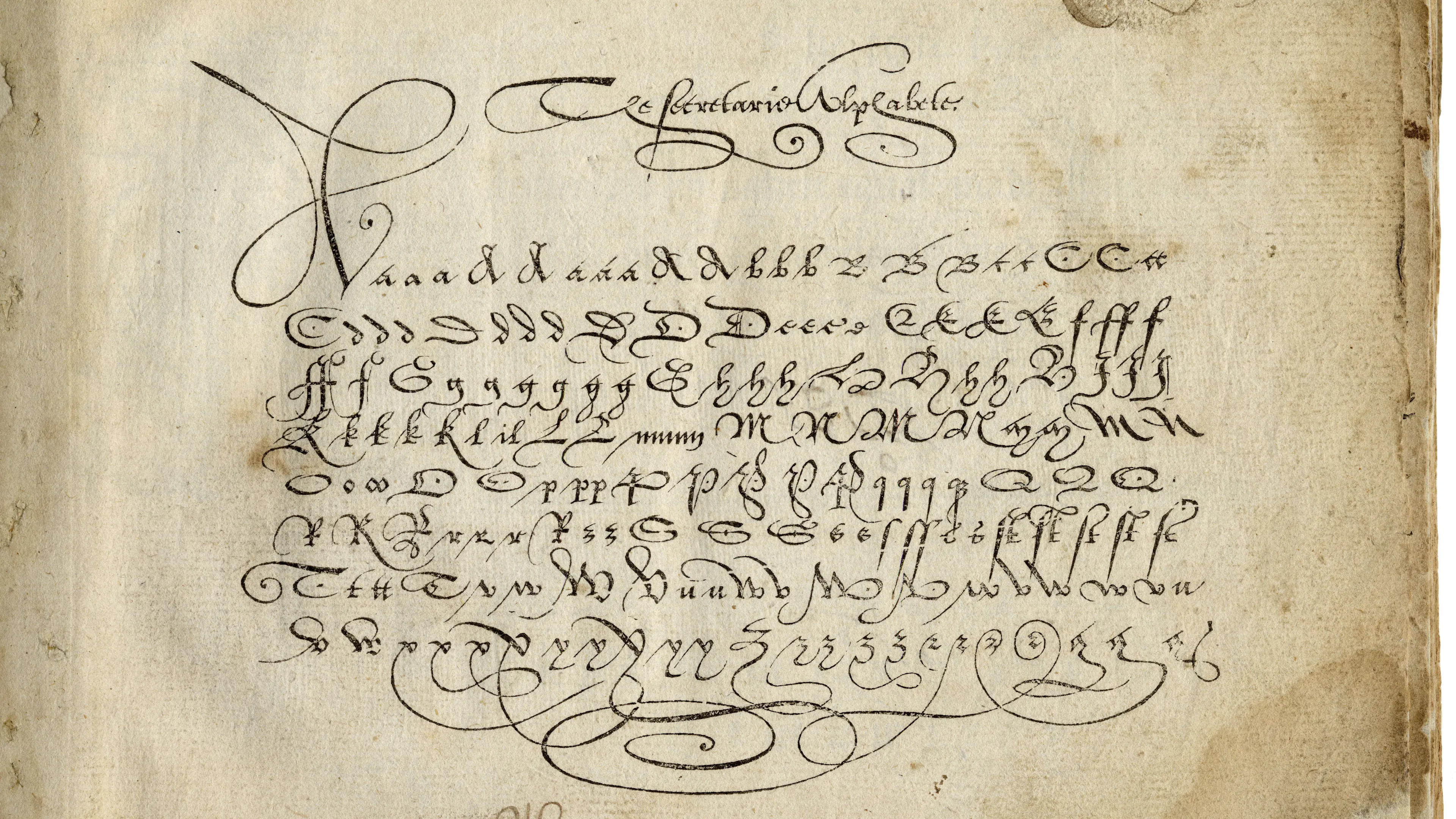
This is a working guide to early modern paleography — the study of how people wrote between roughly 1500 and 1800, and how to read what they left behind. It covers the hands you will meet in a European or North American archive, the marks that trip readers up, the dating conventions that quietly corrupt a citation, and where machine transcription fits into serious research without displacing the historian's judgment.
Early modern paleography is the study of how people wrote between roughly 1500 and 1800, and how to read what they wrote. For a working historian, the practical problem breaks into three parts: identifying the hand on the page (secretary, italic, French bâtarde, German Kurrent, and their relatives), decoding the letterforms and abbreviations that no longer survive in modern writing (the long s, the thorn-derived ye, the macron for an omitted nasal), and choosing a transcription convention — diplomatic, semi-diplomatic, or normalized — and holding to it consistently. Get those three right and the rest is patience.
This is a reference for that work: the hands you will actually meet in a European or North American archive, the marks that trip people up, and the conventions that make a transcription defensible. It sits within the broader craft of reading old handwriting and paleography, and it assumes you would rather understand a page than be told a machine has understood it for you.
The hands you will meet, c. 1500–1800
Paleography begins with recognition. Before you can read a document you have to know what family of script you are looking at, because the letterforms — and the traps — differ by hand.
Secretary hand is the script most English researchers hit first and hardest. It was the dominant English documentary hand of the sixteenth and seventeenth centuries, and its diagnostic features are unfamiliar enough to stop a modern reader cold: looped ascenders and descenders, a single-compartment a, an e that reads like a reversed e or a c with a tail, a long-tailed r, and h and t built from distinctive crossed strokes. Italic displaced it over the eighteenth century, but it persisted in legal and formal use into the early nineteenth. Cambridge's English Handwriting 1500–1700 resource remains the standard training ground, and if secretary is your immediate obstacle, a dedicated walkthrough of its letterforms is worth the detour.
Italic and humanist cursive arrived from Italy in the late fifteenth century, derived from humanist minuscule, and it is the ancestor of modern English handwriting — which makes it the easiest of the period's hands to read at sight. From it descend the English round hand (copperplate), a seventeenth-century development that became the eighteenth-century standard.
Court hands are a separate difficulty. This family of English legal scripts — Common Law, Chancery, Exchequer — was deliberately conservative and, in the case of Chancery, famously hard; it lingered in formal use into the eighteenth century long after ordinary writing had moved on.
The Continental hands follow their own lineages. French cursive, the bâtarde and notarial hands, dominated French vernacular writing from the sixteenth to eighteenth centuries: dense, heavily looped, and thick with ligatures. The École nationale des chartes maintains Theleme as a reference for it. German Kurrent and its angular chancery variant Kanzleischrift served German vernacular writing from the sixteenth century until 1941; Sütterlin, the simplified teaching form most people have heard of, was only in schools from 1911 to about 1941 and is a late chapter, not the whole story. Spanish procesal — a long-lived notarial cursive — descends from the fifteenth-century cortesana, the ancestor of italic type. Italian mercantesca (the medieval merchant hand) and cancelleresca (the chancery hand from which italic type derives) round out the Romance tradition, alongside Dutch chancery cursive with its own distinctive letterforms.
A note that matters for anyone reaching for a tool later: these are all written in the Latin alphabet, whatever the language. The distinction between script and language is not pedantry — it governs what any recognition system can and cannot do, a point developed in the discussion of which languages and scripts HTR actually reads.
The letterforms that trip everyone up
Once you have identified the hand, the individual marks are where transcription errors are made. A handful recur across languages and hands often enough to be worth committing to memory.
The long s (ſ, U+017F). Used medially and initially in English, French, and German from roughly 1500 to 1800 — but not as a final letter, and not before another long s. It looks like an f without the full crossbar, and misreading it as f is the single most common early modern transcription error. It was abandoned in English print around 1790–1810 and persisted in handwriting a little longer.
Thorn and the y-shaped article. Thorn (Þ/þ) had been replaced by th in English by the fourteenth century, but its ghost survives in secretary hand as the y-shaped abbreviations ye, yt, and ys — meaning the, that, and this. They are not "ye olde" anything; the y is a thorn in disguise.
Minims. The short vertical strokes that make up m, n, u, i are the classic ambiguity: a run of them — minimum, say, or a Roman numeral — can be read several ways, and only context resolves it. This is precisely the kind of judgment paleographic competence exists to make.
u/v and i/j. These were variant shapes of single letters — u and v a vowel/consonant pair, i and j likewise — and the modern split only stabilized in the sixteenth and seventeenth centuries. Expect loue for love and iustice for justice.
Abbreviations. Early modern scribes and printers alike carried a large repertoire of space-saving marks. A suspension omits letters at the end of a word; a contraction omits them in the middle, often marked by a stroke through a descender. The macron or titulus (combining macron, U+0304) marks an omitted nasal, so q̃ expands to que and a barred p to per or pro. Standalone signs — brevigraphs — stand for whole words: the Tironian et (⁊, U+204A), the -us/-rum abbreviation, the -em sign. For Latin abbreviations, Cappelli's Dizionario di abbreviature latine ed italiane remains the reference dictionary. When you record these in Unicode, the Medieval Unicode Font Initiative recommendation gives you code points aligned to the standard rather than improvised substitutes.
Dating: the trap hiding in plain sight
A correctly transcribed date can still be wrong by a year if you do not know the conventions.
Regnal years count from a monarch's accession, not the calendar year: 14° Eliz. is the fourteenth regnal year of Elizabeth I, which runs across 1571/72. Old Style and New Style is the more dangerous trap. England kept the Julian calendar until September 1752, with the legal year beginning on 25 March (Lady Day), while Catholic Europe had adopted the Gregorian calendar from 1582. A document dated in January, February, or March in seventeenth- or eighteenth-century England therefore often carries what looks to us like the previous year. And in Roman numerals, a terminal j — iiij, vj — is simply a variant final i, not a distinct numeral.
Choosing a transcription convention
Reading the page is half the task. The other half is deciding how faithfully to represent what you read, and documenting that decision.
- Diplomatic transcription preserves everything verbatim: original spelling, abbreviations, punctuation, deletions, insertions. It is the most defensible for scholarly citation and the most laborious.
- Semi-diplomatic expands abbreviations — usually with the expansion marked, as yo[u]r — but keeps original spelling and layout.
- Normalized transcription modernizes spelling, punctuation, and layout. Legitimate, but only if the convention is stated so a reader knows what has been changed.
The recurring error here is treating archaic spelling as a mistake. It is not. Publick, shew, yeomanry — these are orthographically correct for their date, because spelling was not standardized. Silently modernizing them is itself a transcription error, and one that quietly destroys evidence about scribe, region, and date. When you formalize any of this for publication, TEI P5 chapter 12 provides the standard encoding for primary sources, and chapter 11 for manuscript description.
Where machine transcription fits — and where it does not
At some point the volume of material outruns the hours. A research project resting on hundreds of pages of French notarial cursive or English secretary hand cannot be transcribed by eye alone on any realistic timeline, and this is where automated transcription enters the workflow. It is worth being precise about what it does and does not change, because three misconceptions do real damage.
"OCR can read old books"
Stock modern OCR — Tesseract, ABBYY, Google Vision, AWS Textract — was trained on modern typefaces and fails systematically on early modern print: it reads the long s as f, drops ligatures, and silently loses the macron. The Texas A&M eMOP project documented baseline character error rates above 10% on early modern print, with dedicated post-correction pipelines needed to push that lower across some 307,000 pages. General OCR is engineered for a page that does not look like your page.
"An LLM can just read it"
Multimodal models can transcribe a historical page with no training, and their headline numbers are not embarrassing. But the failure mode is the problem. General LLMs err by silent normalization — modernizing spelling, regularizing capitals and punctuation — and by producing plausible readings with no statistical grounding in the image. On genuinely difficult English hands, a recent preprint (Humphries, Leddy & Downton, 2024) found general models roughly comparable to a stock Transkribus model and closer still after self-review, but that result rests on a single corpus of eighteenth- and nineteenth-century English hands, has not completed peer review, and — like every method here — still requires a paleographically literate reader checking the output against the page. A character-level error from a specialist tool is visible and recoverable. A fluent fabrication is neither, which is exactly why it is dangerous.
"HTR removes the need for paleography"
It does not. Fine-tuned specialist models reach low single-digit character error rates only on hands inside their training data; on unseen hands they run far higher, and the training burden is around 75 ground-truth pages per hand. You still need paleographic competence to check the output, resolve the minims, and decide which readings to trust. The mechanics of that pipeline — segmentation, recognition, why accuracy tracks how well the model matches your hand — are worth understanding, and are set out in how HTR actually works and in the distinction between OCR and HTR.
Source integrity as the governing principle
The principle that should govern the choice of tool is the one this whole guide turns on: source integrity. A transcription is evidence only if it preserves what is on the page. This is where Leo's transcription model, ATR-1, takes its position — it is built to transcribe what is written rather than to smooth it into modern, plausible prose. The long s stays a long s; the macron is not silently resolved to the letters it stands for; the archaic spelling and the strikethrough survive into the transcript. It reads Latin-script manuscript and printed material across English, French, German, Spanish, Italian, Dutch, and Latin among other languages, out of the box, with no per-hand model to train first. On a randomized 97-image sample of early modern English manuscripts from the Folger Shakespeare Library, ATR-1 recorded roughly a 5% character error rate at release — the lowest in a comparison that included Transkribus's Text Titan I (~13%) and several general LLMs; the full benchmark data is published here. None of that removes the reader from the loop. It moves the bottleneck from deciphering every character to verifying a draft — which, when the alternative is transcribing a diary of 900 pages by hand, is the difference that lets the analysis begin.
The skill that remains yours
Tools change the economics of transcription; they do not change the discipline. Knowing that ye is a thorn, that a January date in 1650s England may mean 1651 to us, that publick is not a typo — this is knowledge that lets you catch the machine's errors, defend your readings, and understand what a scribe was actually doing on the page. Paleography was never only about deciphering marks. It is about reading a document closely enough to know what it is. That competence is what makes a transcription citable, and it stays with the historian, whatever reads the first draft.
Frequently Asked Questions
What is early modern paleography?
Early modern paleography is the study of how people wrote between roughly 1500 and 1800, and how to read what they left behind. For a working historian the task breaks into three parts: identifying the hand on the page (secretary, italic, French bâtarde, German Kurrent, and their relatives), decoding the letterforms and abbreviations that no longer survive in modern writing (the long s, the thorn-derived ye, the macron for an omitted nasal), and choosing a transcription convention — diplomatic, semi-diplomatic, or normalized — and holding to it consistently. Get those three right and the rest is patience.
Why is the long s so often misread in old documents?
The long s (ſ) is the single most common early modern transcription error because it looks like an f without the full crossbar and is routinely misread as one. It was used medially and initially in English, French, and German from roughly 1500 to 1800 — but never as a final letter and not before another long s. English print abandoned it around 1790–1810, and handwriting held onto it a little longer. Recognizing it on sight is one of the small competences that separates a defensible transcription from a corrupted one.
Does "ye olde" really mean "the old"?
Yes — the y in forms like ye, yt, and ys is a thorn in disguise, standing for the, that, and this. Thorn (Þ/þ) had been replaced by th in English by the fourteenth century, but its ghost survived in secretary hand as these y-shaped abbreviations. So "ye olde" was never pronounced with a y sound; it is simply an old spelling of "the." Reading it as a literal y is one of the recurring traps in early modern documents, and knowing the history resolves it immediately.
Can OCR or an LLM transcribe early modern documents accurately?
Not reliably on their own. Stock modern OCR — Tesseract, ABBYY, Google Vision, AWS Textract — was trained on modern typefaces and fails systematically on early modern print, reading the long s as f, dropping ligatures, and losing the macron; the eMOP project documented baseline character error rates above 10% on early modern print. General LLMs err by silent normalization, modernizing spelling and punctuation and producing plausible but ungrounded readings. Both still require a paleographically literate reader checking the output against the page, because a fluent fabrication is far harder to catch than a visible character-level error.
Why does a January date in 1650s England sometimes mean the following year?
Because England kept the Julian calendar until September 1752, with the legal year beginning on 25 March (Lady Day) rather than 1 January. A document dated in January, February, or March in seventeenth- or eighteenth-century England therefore often carries what looks to us like the previous year — an Old Style date that must be adjusted to New Style. Catholic Europe had adopted the Gregorian calendar from 1582, so the two systems ran in parallel for well over a century. Ignoring the convention can put a correctly transcribed date wrong by a full year.