How to Transcribe Parish Records: A Genealogist's Guide to Reading the Register Faithfully
Parish record transcription for genealogists, focusing on faithful verbatim reading of baptisms, marriages, and burials, handling hands, abbreviations, dates, and machine-assisted drafts without losing source integrity.
Leo Team
July 15, 2026
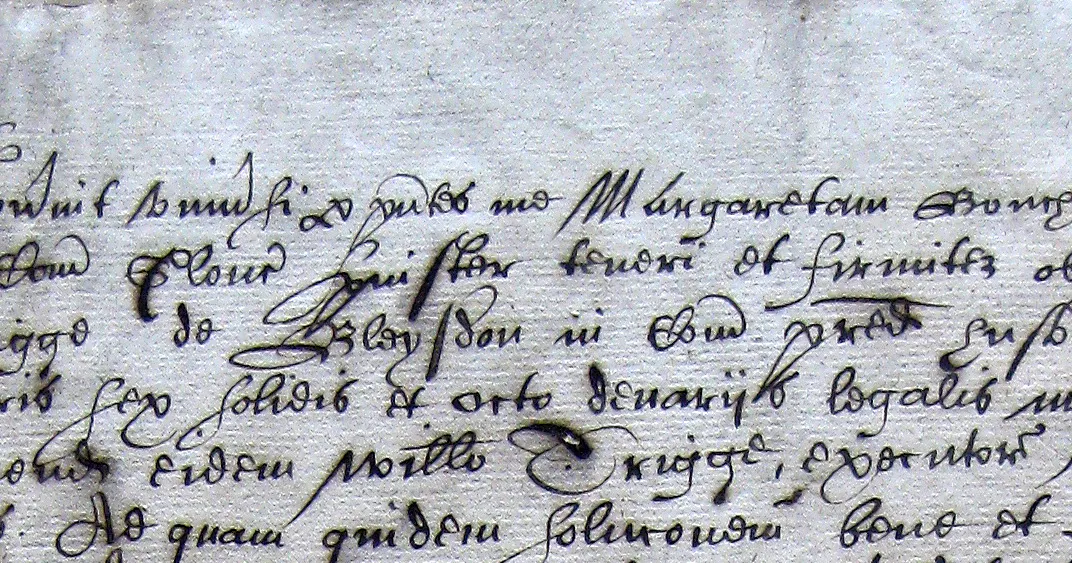
This is a practical guide to transcribing parish records — the baptisms, marriages, and burials that anchor most family trees. It covers how to locate the register, read the hand, handle abbreviations and dating, and where machine transcription genuinely helps. The aim throughout is source integrity: a transcription you can trust, and one the next researcher can trust too.
Transcribing a parish register means producing a faithful, verbatim record of what a clergyman actually wrote on the page — baptisms, marriages, and burials — preserving the original spelling, abbreviations, and dating exactly as they appear, then adding a clearly labelled modernised reading only if you need one. The reliable method remains careful paleography: locate the register and a high-resolution image, read it against a script tutorial for the hand and period, cross-check names and dates against indexes, and cite the source precisely. Every faster method — general OCR, an AI chatbot, or specialist handwritten text recognition — still ends in the same place: manual verification against the image.
That last point is the one most guides skip, and it is the one that will save your family tree. This is part of the broader work of transcribing genealogy and family history records, where the register is often the single hardest document a researcher meets. What follows is how to do it properly.
Know what you are actually reading
A parish register is the official book in which the parish clergyman recorded baptisms, marriages, and burials. In England the genre begins with Thomas Cromwell's 1538 injunction, which required every parish to keep a weekly book of the three rites. From 1598, parishes were also to send an annual copy — the bishop's transcript — to the diocesan bishop.
That copy matters more than it first appears. A bishop's transcript was written by a different clerk, often months after the event, and it survives for many parishes where the original register is lost. Treat it as a parallel source, not a backup: where both survive, they can disagree, and one sometimes preserves a detail the other drops. Cross-check them.
The genre has parallel origin points across Europe, and knowing the date your record should exist is half the battle of finding it:
- Catholic registers worldwide follow the Council of Trent, Session XXIV (1563) and its canon Tametsi, which obliged priests to record marriages and their surrounding evidence, and remained in force until Easter 1908.
- France dates systematic registers to the 1539 Ordinance of Villers-Cotterêts, which also mandated French rather than Latin in legal documents.
- The Netherlands replaced the older doop-, trouw- en begraafboeken (DTB) with municipal civil registration from 1 March 1811 under the Napoleonic code.
- German Lutheran and Reformed Kirchenbücher were introduced state by state from the sixteenth century (Württemberg 1559, Saxony 1580).
- Scotland's Old Parochial Registers begin around 1554, with the earliest surviving entry at Errol, Perthshire.
Two later English statutes reshaped what the page looks like. Hardwicke's Marriage Act of 1753 (in force 1754) required banns or a licence and witnesses' signatures. Rose's Act of 1812 introduced pre-printed forms with separate tables for baptisms, burials, and marriages. From 1 July 1837, civil registration took over in England and Wales — the point where many family lines cross from parish books into government records.
Locate the register and get a good image
Leo begins where the reading begins, so start with the source. Registers live in county record offices, diocesan archives, and the parish chest; images are catalogued through the FamilySearch England Parish Registers wiki, Ancestry, FindMyPast, and the volunteer indexes at FreeREG and FreeBMD.
A word on those indexes, because it is the single most common mistake in genealogy: an index is not a transcription. FamilySearch, Ancestry, and FreeREG entries are search abstracts — a name, a year, a parish — keyed from the page but rarely reproducing its wording, and of widely varying quality. No aggregate error rate for volunteer indexes has been published in peer-reviewed form; the projects flag known errors and rely on arbitration. Use the index to find the entry, then read the original image yourself. Obtain the highest-resolution scan you can. Resolution is not a nicety here — it is the difference between reading a superscript mark and guessing at one.
Read the hand
The register's difficulty is almost always the handwriting, and which hand depends on the period.
English secretary hand dominates roughly 1500–1700 and persists informally later. Its angular, unfamiliar letter-shapes are where most readers stall — the long s without a crossbar, the ct and ff ligatures, forms that look like nothing in a modern alphabet. If this is your wall, work through a dedicated primer; our beginner's guide to reading secretary hand covers the distinctive letterforms and the trick of contextual reading. The Cambridge English Handwriting 1500–1700 course and The National Archives' palaeography tutorials are the standard free routes in.
From about 1700, italic hands take over and grow steadily more familiar, transitioning eventually to copperplate. In German-language registers you will meet Kurrentschrift and, later, Sütterlin — the same Latin alphabet, radically different letter-shapes, with the k/z/f cluster notorious for tripping up readers. For a broader map of which hand belongs to which period, our guide to early modern paleography works through identification and the misleading letterforms.
The single most reliable source of error is the long s (ſ), which is often indistinguishable from a handwritten f and breaks up otherwise familiar words — miſtake reads as miftake until you know to expect it. Do not silently correct it. Transcribe what is on the page.
Expand — or don't expand — the abbreviations
Parish registers are dense with scribal shorthand, and how you handle it determines whether your transcription counts as evidence.
A seventeenth-century English register may mix English and Latin freely, with Latin formulae persisting into the mid-eighteenth century. The standard Latin forms recur constantly: a baptism as Thomas filius Henrici BLOGGS et Annae uxoris ejus baptizatus fuit; a burial as Sepultus fuit … Anno Domini; a marriage as Matrimonium celebratum fuit inter …, with banns recorded as denunciationes factae sunt tribus diebus Dominicis. This is Latin-language material, and worth naming as such — but the abbreviation marks that carry it are the same marks that travel straight into English, French, and German vernacular hands. Learn them once and they serve everywhere.
Watch for fil. standing in for filius; the superscript letters and suspension marks that signal pro, per, and -us/-um endings; contractions such as xpc for Christus; a p with a macron for pro or per; and the Tironian et (⁊) for and. Our reference on manuscript abbreviations and ligatures sets out the main families of shorthand and when each should be preserved or expanded.
The convention, per the Board for Certification of Genealogists and the Society of Genealogists, is firm: keep a literal (verbatim) transcription as the archival record — original spellings, abbreviations, punctuation, capitalisation intact — and present any modernised, expanded reading separately and clearly labelled. Where you supply letters, mark them: square brackets for inserted letters (yo[u]r), [?] or [illegible] for unread text, ellipses for omissions, italics for supplied expansions, and "sic" used sparingly to flag an apparent error without changing it. A modernised reading is useful for reading aloud. It is not evidence, because the moment you silently "fix" a spelling you have destroyed the thing a later researcher might need.
Get the date right
The calendar is where confident transcribers quietly go wrong. Until 1752 in Britain, the civil year began on 25 March (Lady Day). A baptism dated 14 February 1749 could be Old Style 1749 or New Style 1750 depending on how you read it. Then in September 1752 Britain dropped eleven days to adopt the Gregorian calendar: 2 September was followed by 14 September. Regnal-year dating ("George II, 25th year") is common in formal headings and needs converting too.
The rule is the same as everywhere else: transcribe the date exactly as written, then add the modern equivalent in brackets — 24 March 1749/50 — preserving both forms. The same year-start and Julian-versus-Gregorian problem recurs across Europe at different cutover dates, so check the local reform date for any continental register.
Where machine transcription fits — and where it doesn't
Once you are reading a handful of pages, hand transcription is manageable. Once you are working through a whole register — hundreds of entries in a single scribe's hand — the labour becomes the bottleneck. This is where machine transcription earns its place, provided you understand what each kind of tool actually does.
Two shortcuts fail badly enough to be worth naming. General-purpose OCR — ABBYY FineReader, Google Cloud Vision, Amazon Textract — is engineered for clean modern type; ABBYY's own documentation states FineReader recognises printed text only. On secretary hand it confuses the long s with f, drops superscript marks, and mis-classifies letter-shapes. Berkeley Library's 2024 comparison of seven OCR tools found none usable as-is on handwriting without manual correction. And a general AI chatbot — ChatGPT, Claude, Gemini — is the more dangerous shortcut, precisely because its output reads so well. These are text-first models that downsample the image; the CHR 2024 benchmark found Gemini underperformed specialist Transformer HTR on handwritten historical lines, with characteristic plausible-but-wrong readings. That is the trap for a genealogist: an OCR error looks like nonsense and you catch it, but a chatbot's confabulation is a fluent, plausible name that is simply not on the page — and it lands in your tree unnoticed. Treat any such output as a hypothesis, never a transcription.
Purpose-built handwritten text recognition (HTR) is the honest tool for the job, and it is worth understanding the difference between HTR and OCR before you choose one. A well-trained specialist model on eighteenth- to nineteenth-century English registers can reach roughly 3–8% character error rate — Transkribus's English Handwriting M3 model reports about 5.1% CER on its validation set, and by the Kurrent-benchmark thresholds a CER of ≤10% is "good" and ≤5% "very good." The catch with the established specialist platforms is the setup: off-the-shelf public models on an unfamiliar hand can exceed 10–15% CER, and closing that gap traditionally means training or fine-tuning your own model, which is real paleography and ground-truthing effort.
This is the stage where Leo is built to help, and it is built around the priority this whole guide has argued for: source integrity. Its transcription model, ATR-1, reads Latin-script manuscripts — whatever the language on the page, English wills, French notarial entries, Dutch registers, German Kirchenbücher, or the mixed Latin of an early English register — with no per-register model training required. On a randomized 97-image sample of early-modern English manuscripts from the Folger Shakespeare Library, ATR-1 scored about 5% character error rate at release, 61% fewer errors than the next-best model tested — a single-corpus benchmark, not a peer-reviewed cross-language study, and one that still ends where every method ends: with your eyes on the image. What matters for a register is that it is trained to transcribe what is written rather than to smooth it into modern prose — the long s stays a long s, the macron is not silently resolved, the archaic spelling survives — and you can upload a phone photo taken in the record office, keep the image beside the transcription as you correct it, and export the result to Word, PDF, or TEI. Because corrections you make feed back into training, the model's readings improve across releases.
The step no tool removes
Whatever gets you to a draft — your own eyes, an HTR model, a chatbot you are too wise to trust — the final act is the same. You read the draft against the image, line by line, resolving every bracket and every doubtful letter, and you cross-check each name and date against an index like FreeREG or FreeBMD before it enters your tree. A machine can carry you from a folder of scans to a searchable draft in an afternoon; it cannot decide whether that faint mark is an e or an o, and getting that wrong is how a wrong ancestor arrives and stays for a decade.
The register rewards patience. Read the hand, respect the abbreviation, preserve the date as written, and label every intervention you make. Do that, and the transcription you leave behind is not just a family tree you can trust — it is a source the next researcher can trust too.
Frequently Asked Questions
How do you transcribe parish records accurately?
Transcribing parish records accurately means producing a faithful, verbatim record of what the clergyman wrote — baptisms, marriages, and burials — preserving the original spelling, abbreviations, and dating exactly as they appear, then adding a clearly labelled modernised reading only if you need one. Locate the register and a high-resolution image, read it against a script tutorial for the hand and period, cross-check names and dates against indexes such as FreeREG or FreeBMD, and cite the source precisely. Every faster method — general OCR, an AI chatbot, or specialist handwritten text recognition — still ends in manual verification against the image.
What is the difference between a parish register and a bishop's transcript?
A parish register is the official book in which the clergyman recorded baptisms, marriages, and burials; a bishop's transcript is an annual copy sent to the diocesan bishop from 1598. Treat the transcript as a parallel source, not a backup: it was written by a different clerk, often months after the event, and it survives for many parishes where the original register is lost. Where both survive, they can disagree, and one sometimes preserves a detail the other drops. Cross-check them rather than assuming one is definitive.
Why is an index not the same as a transcription?
An index is a search abstract — a name, a year, a parish — keyed from the page but rarely reproducing its wording, and of widely varying quality. FamilySearch, Ancestry, and FreeREG entries help you find an entry, but they are not the entry itself. No aggregate error rate for volunteer indexes has been published in peer-reviewed form; the projects flag known errors and rely on arbitration. Use the index to locate the record, then read the original high-resolution image yourself. Skipping that step is the single most common mistake in genealogy, and it is how a wrong reading enters a family tree unnoticed.
How do you handle dates in parish records before 1752?
Transcribe the date exactly as written, then add the modern equivalent in brackets — 24 March 1749/50 — preserving both forms. Until 1752 in Britain, the civil year began on 25 March (Lady Day), so a baptism dated 14 February 1749 could be Old Style 1749 or New Style 1750 depending on how you read it. In September 1752 Britain dropped eleven days to adopt the Gregorian calendar: 2 September was followed by 14 September. Regnal-year dating, such as "George II, 25th year," is common in formal headings and needs converting too. Continental registers reformed at different dates, so check locally.
Can I use ChatGPT to transcribe old parish registers?
No — treat any general AI chatbot output as a hypothesis, never a transcription. Chatbots like ChatGPT, Claude, and Gemini are text-first models that downsample the image, producing fluent, plausible readings that may simply not be on the page. That is the trap: an OCR error looks like nonsense and you catch it, but a chatbot's confabulation is a plausible name that lands in your tree unnoticed. Purpose-built handwritten text recognition is the honest tool. Leo's ATR-1 model reads Latin-script manuscripts without per-register training and is built to transcribe what is written rather than smooth it into modern prose — but it still ends with your eyes on the image.